
Introduction
Van overloading…
Thousands of UK van drivers could be risking huge fines without realising it.
Many could also be putting their Cheap Van Insurance UK policies at risk.
Official figures show around 60 per cent of Light Goods Vehicle offences involved overloaded vans.
That makes overloading one of the most common van offences in the UK.
Even worse, the average fine in early 2025 was almost £10,000.
That is a huge penalty.
Especially for tradespeople and small businesses.
Fuel costs remain high.
Running costs keep rising.
And Van Insurance prices continue increasing across the UK.
Here’s the worrying part.
Most drivers do not overload their vans on purpose.
Usually, it happens slowly.
One extra delivery.
A few more tools.
A busy morning.
And suddenly, the van is over its legal weight limit.
One overloaded van could cost far more than most drivers expect.
Why Van Overloading Has Become One Of The UK’s Biggest Van Problems
Many drivers believe their van can handle “a bit extra.”
Unfortunately, that causes problems.
Especially for tradespeople and delivery drivers.
Because payload weight changes constantly.
One day a van carries lightweight tools.
The next day it carries heavy materials.
Meanwhile, businesses face growing pressure.
Drivers rush between jobs.
Extra deliveries get added.
Vehicle checks get missed.
As a result, overloaded vans are becoming far more common.
That is one reason DVSA checks have increased.
Especially near:
- industrial estates
- motorway routes
- delivery hubs
And importantly, most overloaded vans do not look overloaded.
That catches drivers out.
Because the weight builds slowly.
Fuel adds weight.
Passengers add weight.
Tools add weight.
Stock adds weight.
Individually, none of these seem excessive.
Together, they can quickly push a van over its legal limit.
Drivers worried about wider compliance issues often also read guides like this vehicle compliance article.
The £10,000 Fine Most Drivers Never See Coming
This is where things become serious.
In early 2025, the average overloading fine reached almost £10,000.
That is not a small penalty.
For many businesses, it could be financially devastating.
Especially for self-employed drivers.
And importantly, penalties increase depending on the offence.
Drivers may receive:
- £50 fines
- £100 penalties
- £200 penalties with points
- £300 penalties with points
However, serious cases can become much more expensive.
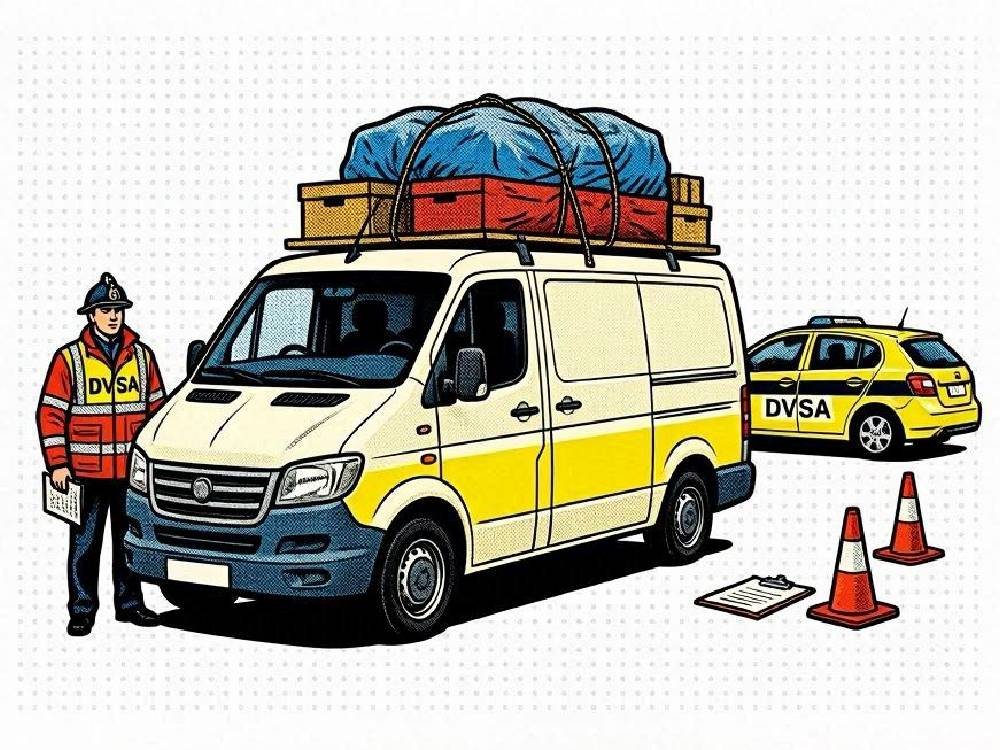
DVSA officers can stop commercial vehicles immediately.
And repeated offences can create even more problems later.
Particularly when drivers search for the Cheapest van insurance available.
Because insurers assess risk carefully.
And repeated compliance problems rarely help reduce premiums.
Especially for fleet operators and high-mileage drivers.
Some drivers also underestimate how quickly insurance prices can rise after incidents and claims.
This is why guides like this Van Insurance article continue attracting attention.
Why Tradespeople And Delivery Drivers Face The Biggest Risks
Most overloading offences happen during normal working days.
Not because drivers are reckless.
Not because they deliberately break the law.
Usually, it comes down to pressure.
Tradespeople carry different tools every day.
Couriers add extra parcels to routes.
Businesses try to save time.
Unfortunately, that creates risk.
Because overloaded vans affect far more than compliance alone.
Braking distances increase.
Tyres wear out faster.
Vehicle handling changes.
Suspension systems take extra strain.
As a result, overloaded vans become a serious safety issue.
That is why enforcement remains strict.
Especially now.
Here’s the uncomfortable truth.
Many drivers never properly check their van’s payload limit.
Instead, they guess.
Or assume.
Or rely on experience.
Unfortunately, the DVSA does not work on guesswork.
Which means one roadside stop can quickly become expensive.
Particularly for drivers already struggling with rising Van Insurance costs.
Many tradespeople also worry about theft risks and rising operating costs, which is why stories like this tool theft article remain highly relevant.
What Happens During A DVSA Roadside Check?
Many drivers assume they will never be stopped.
Until they are.
DVSA roadside checks happen every day across the UK.
Especially near:
- logistics centres
- construction sites
- industrial estates
- major delivery routes
During inspections, officers may check:
- vehicle weight
- tyre condition
- load security
- paperwork
- vehicle safety
And importantly, overloaded vans often attract even more attention.
That means one issue can quickly uncover others.
Some drivers think they can explain the situation away.
Usually, that does not work.
DVSA officers follow strict enforcement rules.
And serious overloads rarely receive sympathy.
Especially where safety becomes an issue.
There is another problem too.
Overloading offences may also increase Cheap Van Insurance UK premiums.
Because insurers see overloaded vehicles as higher-risk.
Particularly where offences happen repeatedly.
That is one reason many businesses now use telematics systems.
These systems help monitor driving behaviour and improve compliance.
They can also help businesses secure Cheap Van Insurance while improving safety standards.
How Overloading Can Increase Van Insurance Costs
Many drivers focus only on the fine.
However, the costs may continue afterwards.
Because insurers constantly assess risk.
And overloaded vans create obvious concerns.
Particularly where offences happen repeatedly.
From an insurer’s perspective, overloaded vehicles carry greater accident risks.
Braking distances increase.
Tyres wear faster.
Vehicle handling becomes less stable.
As a result, repeated offences may increase Cheap Van Insurance UK premiums.
Especially for businesses operating multiple vans.
This is why many companies now take compliance far more seriously.
Because prevention costs less than enforcement.
Drivers often reduce costs by following smarter Cheap Van Insurance tips.
Simple Ways Drivers Can Reduce Compliance Risks
Thankfully, many overloading offences are avoidable.
Small changes can make a huge difference.
Especially during busy weeks.
Drivers can reduce risk by:
- checking payload limits properly
- avoiding rushed loading
- carrying out regular inspections
- reviewing van specifications carefully
Here’s the important point.
Payload calculations should include everything.
Not just cargo.
Fuel matters.
Passengers matter.
Tools matter.
Roof racks matter.
Shelving matters.
It all adds weight.
And meanwhile, proactive vehicle management may help businesses secure better Van Insurance prices over time.
Especially when insurers reward lower-risk drivers.
Many drivers also forget that modifications can affect cover.
That is why articles like this Van Insurance guide continue growing in popularity across the UK.
Conclusion
Overloading has become one of the most common van offences in Britain.
And many drivers still underestimate the risks.
One overloaded van could lead to:
- huge fines
- penalty points
- insurance complications
- rising costs
Meanwhile, DVSA enforcement continues increasing across the UK.
That means compliance matters more than ever.
Particularly for businesses already struggling with rising Van Insurance costs.
Drivers wanting to better protect themselves can also read guides on:
overloading and Van Insurance and mistakes that could affect future cover.