Van Overloading Is Surging Across The UK And Drivers Are Paying The Price

Introduction

Van overloading…

Thousands of UK van drivers could be risking huge fines without realising it.

Many could also be putting their Cheap Van Insurance UK policies at risk.

Official figures show around 60 per cent of Light Goods Vehicle offences involved overloaded vans.

That makes overloading one of the most common van offences in the UK.

Even worse, the average fine in early 2025 was almost £10,000.

That is a huge penalty.

Especially for tradespeople and small businesses.

Fuel costs remain high.

Running costs keep rising.

And Van Insurance prices continue increasing across the UK.

Here’s the worrying part.

Most drivers do not overload their vans on purpose.

Usually, it happens slowly.

One extra delivery.

A few more tools.

A busy morning.

And suddenly, the van is over its legal weight limit.

One overloaded van could cost far more than most drivers expect.

Why Van Overloading Has Become One Of The UK’s Biggest Van Problems

Many drivers believe their van can handle “a bit extra.”

Unfortunately, that causes problems.

Especially for tradespeople and delivery drivers.

Because payload weight changes constantly.

One day a van carries lightweight tools.

The next day it carries heavy materials.

Meanwhile, businesses face growing pressure.

Drivers rush between jobs.

Extra deliveries get added.

Vehicle checks get missed.

As a result, overloaded vans are becoming far more common.

That is one reason DVSA checks have increased.

Especially near:

  • industrial estates
  • motorway routes
  • delivery hubs

And importantly, most overloaded vans do not look overloaded.

That catches drivers out.

Because the weight builds slowly.

Fuel adds weight.

Passengers add weight.

Tools add weight.

Stock adds weight.

Individually, none of these seem excessive.

Together, they can quickly push a van over its legal limit.

Drivers worried about wider compliance issues often also read guides like this vehicle compliance article.

The £10,000 Fine Most Drivers Never See Coming

This is where things become serious.

In early 2025, the average overloading fine reached almost £10,000.

That is not a small penalty.

For many businesses, it could be financially devastating.

Especially for self-employed drivers.

And importantly, penalties increase depending on the offence.

Drivers may receive:

  • £50 fines
  • £100 penalties
  • £200 penalties with points
  • £300 penalties with points

However, serious cases can become much more expensive.

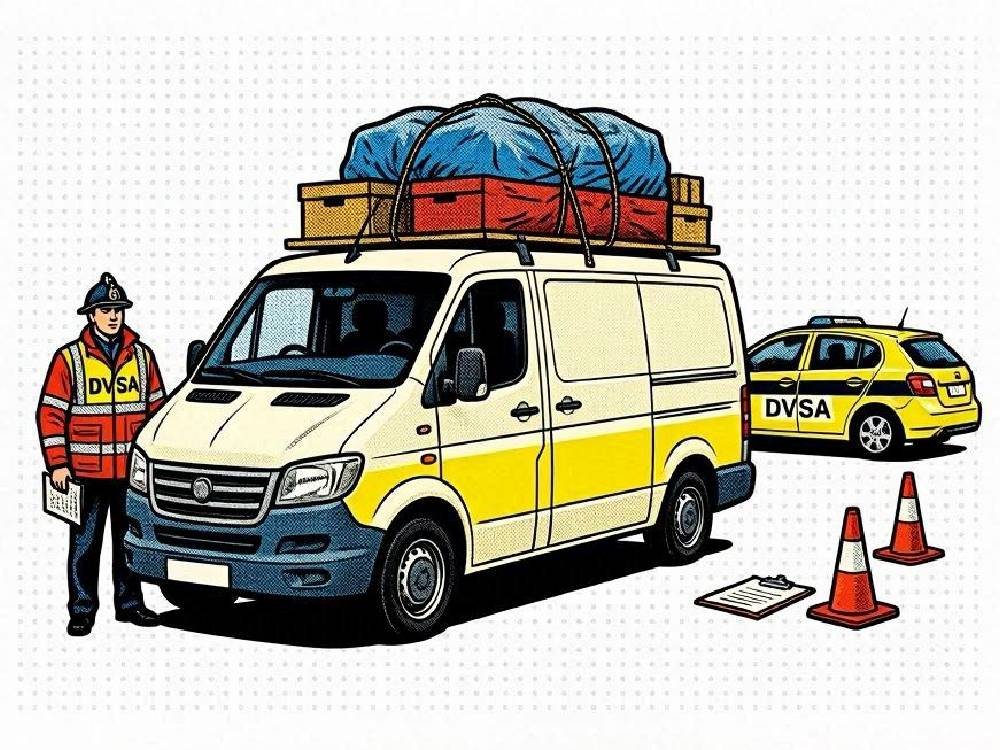
DVSA officers can stop commercial vehicles immediately.

And repeated offences can create even more problems later.

Particularly when drivers search for the Cheapest van insurance available.

Because insurers assess risk carefully.

And repeated compliance problems rarely help reduce premiums.

Especially for fleet operators and high-mileage drivers.

Some drivers also underestimate how quickly insurance prices can rise after incidents and claims.

This is why guides like this Van Insurance article continue attracting attention.

Why Tradespeople And Delivery Drivers Face The Biggest Risks

Most overloading offences happen during normal working days.

Not because drivers are reckless.

Not because they deliberately break the law.

Usually, it comes down to pressure.

Tradespeople carry different tools every day.

Couriers add extra parcels to routes.

Businesses try to save time.

Unfortunately, that creates risk.

Because overloaded vans affect far more than compliance alone.

Braking distances increase.

Tyres wear out faster.

Vehicle handling changes.

Suspension systems take extra strain.

As a result, overloaded vans become a serious safety issue.

That is why enforcement remains strict.

Especially now.

Here’s the uncomfortable truth.

Many drivers never properly check their van’s payload limit.

Instead, they guess.

Or assume.

Or rely on experience.

Unfortunately, the DVSA does not work on guesswork.

Which means one roadside stop can quickly become expensive.

Particularly for drivers already struggling with rising Van Insurance costs.

Many tradespeople also worry about theft risks and rising operating costs, which is why stories like this tool theft article remain highly relevant.

What Happens During A DVSA Roadside Check?

Many drivers assume they will never be stopped.

Until they are.

DVSA roadside checks happen every day across the UK.

Especially near:

  • logistics centres
  • construction sites
  • industrial estates
  • major delivery routes

During inspections, officers may check:

  • vehicle weight
  • tyre condition
  • load security
  • paperwork
  • vehicle safety

And importantly, overloaded vans often attract even more attention.

That means one issue can quickly uncover others.

Some drivers think they can explain the situation away.

Usually, that does not work.

DVSA officers follow strict enforcement rules.

And serious overloads rarely receive sympathy.

Especially where safety becomes an issue.

There is another problem too.

Overloading offences may also increase Cheap Van Insurance UK premiums.

Because insurers see overloaded vehicles as higher-risk.

Particularly where offences happen repeatedly.

That is one reason many businesses now use telematics systems.

These systems help monitor driving behaviour and improve compliance.

They can also help businesses secure Cheap Van Insurance while improving safety standards.

How Overloading Can Increase Van Insurance Costs

Many drivers focus only on the fine.

However, the costs may continue afterwards.

Because insurers constantly assess risk.

And overloaded vans create obvious concerns.

Particularly where offences happen repeatedly.

From an insurer’s perspective, overloaded vehicles carry greater accident risks.

Braking distances increase.

Tyres wear faster.

Vehicle handling becomes less stable.

As a result, repeated offences may increase Cheap Van Insurance UK premiums.

Especially for businesses operating multiple vans.

This is why many companies now take compliance far more seriously.

Because prevention costs less than enforcement.

Drivers often reduce costs by following smarter Cheap Van Insurance tips.

Simple Ways Drivers Can Reduce Compliance Risks

Thankfully, many overloading offences are avoidable.

Small changes can make a huge difference.

Especially during busy weeks.

Drivers can reduce risk by:

  • checking payload limits properly
  • avoiding rushed loading
  • carrying out regular inspections
  • reviewing van specifications carefully

Here’s the important point.

Payload calculations should include everything.

Not just cargo.

Fuel matters.

Passengers matter.

Tools matter.

Roof racks matter.

Shelving matters.

It all adds weight.

And meanwhile, proactive vehicle management may help businesses secure better Van Insurance prices over time.

Especially when insurers reward lower-risk drivers.

Many drivers also forget that modifications can affect cover.

That is why articles like this Van Insurance guide continue growing in popularity across the UK.

Conclusion

Overloading has become one of the most common van offences in Britain.

And many drivers still underestimate the risks.

One overloaded van could lead to:

  • huge fines
  • penalty points
  • insurance complications
  • rising costs

Meanwhile, DVSA enforcement continues increasing across the UK.

That means compliance matters more than ever.

Particularly for businesses already struggling with rising Van Insurance costs.

Drivers wanting to better protect themselves can also read guides on:

overloading and Van Insurance and mistakes that could affect future cover.
Overloading Your Van? You’re One Trip from Disaster

Introduction

Overloading your van — and your policy might just collapse under the weight.

You probably think adding a few extra tools or materials won’t hurt.

But here’s the truth — overloading your van can void your van insurance entirely.

And when that happens, you’re not just breaking the law.

You’re putting your finances, your licence, and even your freedom on the line.

So, how does it all work — and what can you do to stay covered?

Let’s break it down.

Overloading — And Why Does It Matter?

To begin with, overloading isn’t just about tossing in one too many bags of cement.

In fact, it means exceeding your van’s Maximum Authorised Mass (MAM) — the total weight legally allowed on the road.

And when that happens, you’ve officially crossed into illegal territory.

Worse still, this isn’t just about traffic laws — it’s your insurance policy on the line.

After all, every van has a strict weight limit for a reason.

Because when you exceed it, too much weight affects braking, steering, tyre grip, and even suspension.

So if your van handles differently or struggles uphill, that extra load could cost more than you think.

Need proof that compliance matters?
Why Proper Vehicle Compliance Is Crucial For Road Safety explains how even small oversights can lead to serious consequences.

Insurance Consequences You Didn’t See Coming By Overloading

Here’s where things get risky.

If your van is overloaded and you crash, your insurance provider can legally refuse to pay.

That means you’d be on the hook for everything — damage to your van, other vehicles, property, and injuries.

Even if you weren’t at fault, insurers can still deny the claim.

Why?

Because overloading breaches your policy terms.

So yes, you could end up completely uninsured — and still paying every penny yourself.

Want to see how this mistake has caught other drivers out?
Check out Are You Driving a Car or a Van? Check Your Insurance Policy.

How Overloading Impacts Future Premiums

Think you’ll just get a warning?

Think again.

Overloading is classed as a motoring offence — and that conviction follows you.

Once it’s on record, you’re required to declare it to your insurer.

And when you do, expect to see those premiums jump.

Even a minor offence can make your policy cost hundreds more next year.

And if you’re caught twice, some insurers may refuse cover altogether.

Overloading once might seem like a shortcut, but it quickly becomes a long-term financial trap.

Want to lower your van insurance premiums?
Have a look at How To Lower Your Premium.

The Driver and Vehicle Standards Agency (DVSA) regularly stops vans for random checks.

And if yours is overweight, you’re in for a rough day.

Fines start small — but escalate fast depending on how far over the limit you are.

Go just 10% over, and you might face an on-the-spot fine.

Push it 30% or more, and things get much worse.

Your van can be prohibited from driving further, forcing you to unload there and then.

That means lost time, lost income, and a possible tow bill on top.

You can read more about penalties in
What Every Van Driver Needs to Know About Load Limits and Seatbelts.

Worst Case Scenario: Prison

This isn’t scare talk — it’s the law.

If you’re caught severely overloading (30% or more) and your van’s deemed dangerous, you could face a court summons.

The penalty?

Fines in the thousands.

Points on your licence.

Even a prison sentence for dangerous driving in extreme cases.

That’s not just losing your insurance.

That’s losing your livelihood.

And it all starts with ignoring a few extra kilos.

For a real-world example of what can happen when cover lapses or conditions are breached, read
How a Simple Van Insurance Lapse Ended in Court – Learn Why.

You’re Not Just Risking Insurance — You’re Risking Lives

Let’s face it — overloaded vans don’t just wreck your insurance.

They threaten everyone on the road.

To begin with, excess weight puts immense pressure on brakes and tyres.

Consequently, your stopping distance increases dramatically.

At the same time, the van becomes harder to steer.

Corners feel looser.

Emergency manoeuvres become unpredictable.

In addition, the suspension wears out faster.

Tyres heat up and burst more easily.

Eventually, something gives — often when you least expect it.

Therefore, it’s not just about legality.

It’s about safety.

Especially if you’re driving long distances for work, every extra kilogram adds risk.

That’s why many drivers now pay more attention to their loading habits.

If you often carry heavy equipment across the country, you’ll want to read this next:
Why UK Tradespeople Are Travelling Further for Better Pay and More Work

Real-Life Examples: It’s Happening More Than You Think

More often than not, drivers don’t realise they’ve crossed the limit.

But here’s the reality: you probably already have.

According to the DVSA, thousands of vans fail roadside checks every year.

In many cases, drivers exceed weight limits by 20%–40%.

Moreover, they often do it unknowingly.

A few extra bags.

A second ladder.

Another box of tools.

And suddenly, you’re over.

In some instances, the consequences are immediate.

The van gets pulled.

You face a fine.

You miss your job.

Your insurance could be void before you even get home.

Clearly, this is no small issue.

So before you load up tomorrow, check this out:
What Really Happens When Your Van’s Off the Road — And How to Avoid It

How To Stay Within The Law (and Lower Your Premium)

Thankfully, staying compliant isn’t complicated.

But it does require consistency.

First, check your van’s Maximum Authorised Mass (MAM).

This figure, found in your manual or logbook, is the legal maximum weight including cargo, fuel, and passengers.

Next, use a weighbridge — or portable scales — to measure your current load.

These tools might seem unnecessary at first.

However, they can prevent thousands in fines and insurance costs.

Then, consider how you load the van.

Heavy items should stay low, centred, and secure.

Avoid stacking beyond shoulder height, and always distribute weight evenly.

By doing this, you protect your van, your insurance, and your future.

Even better?

Insurers see compliant drivers as lower risk.

As a result, you’ll often qualify for cheaper premiums — and in some cases, exclusive offers.

For more clever ways to cut costs without cutting cover, don’t miss:
10 Simple Hacks to Instantly Lower Your Van Insurance and Save Big

Conclusion

To sum it all up — overloading is a shortcut to disaster.

Not only could it invalidate your policy, but it could also land you with a fine, a court date, or even a prison sentence.

Worse still, you might end up paying out of pocket for an accident your insurer refuses to cover.

That said, it’s entirely avoidable.

First, weigh your van.

Then, load it correctly.

After that, stay within legal limits — because as a result, you’ll remain compliant, safe, and fully insured.

And if you’re serious about keeping your premiums low, this is exactly where to start.

Still curious about what else can affect your policy?

Then take a look at these next:

Overload your van — and your policy might just collapse under the weight.

New Tax Rise Set to Hit Millions of Van Drivers

Introduction

Undoubtedly, big changes are on the horizon for van owners in the UK.

From April 2025, Vehicle Excise Duty (VED) rates will increase for millions of drivers.

But not every van owner will feel the pinch.

Some van models are set to avoid the rise entirely, offering a silver lining for certain drivers.

New Tax Rise: What You Need To Know

Looking ahead to April 2025, significant tax changes are set to take effect for van owners.

As a result, this will mark a notable shift in financial planning for many drivers.

These adjustments are directly linked to Vehicle Excise Duty (VED), which is a tax applied to vehicle ownership.

Traditionally, VED rates have increased each year to keep pace with inflation, and unsurprisingly, this year follows the same pattern.

But what’s new? Zero-emission vehicles, previously exempt, will now be subject to these charges.

For van drivers, this means even electric vans will no longer escape taxation.

How Big Are The Increases?

The government is clear: this isn’t just a minor adjustment.

VED rates are expected to rise in line with the Retail Price Index (RPI).

For many petrol and diesel vans, the cost could climb by an additional £10, increasing from £345 to £355 annually.

While it may sound small, the collective impact is enormous.

With over 4 million vans on UK roads, these changes are projected to generate an extra £1.7 billion in revenue over the next five years.

If you’re worried about the combined costs, it’s worth reviewing your insurance.

You could explore the cheapest van insurance options to reduce overall expenses.

What Does This Mean For Van Drivers?

The financial pressure on van owners is steadily mounting.

In particular, new tax changes and rising costs are contributing to an increasingly challenging financial landscape for many drivers.

As a result, those who rely on their vans for business or personal use are increasingly likely to feel the strain.

And it’s not just about the tax increase.

Fines for non-compliance can reach up to £1,000, adding another layer of cost for those who fail to pay their dues.

“Untaxed vans could cost their owners far more than they realise.”

If you’re unsure about your current compliance, see our guide on proper vehicle compliance to avoid fines.

Financial Impact On Van Drivers

Let’s break down how these changes could affect your wallet.

1. Standard Van Tax Increases

For petrol and diesel vans, expect a £10 rise per year.

This increase may seem minor, but for businesses with large fleets, the costs can stack up quickly.

2. Zero-Emission Vans Are No Longer Exempt

For the first time, electric vans will now face new taxes, marking a significant shift in policy.

Starting in the second year of ownership, these vehicles will transition to the standard annual Vehicle Excise Duty (VED) rate.

For many drivers, this adjustment may come as a surprise, especially considering the previous tax exemptions for electric vehicles.

As a result, this change could potentially discourage some individuals from making the switch to greener, more sustainable options.

If you’re considering upgrading your van, make sure your new vehicle meets your insurance needs.

Check our blog on van insurance for new drivers for helpful insights.

3. The Government’s Perspective

Why is this happening?

According to HMRC, these increases ensure VED receipts keep pace with inflation.

But critics have labelled the policy “anti-vehicle,” pointing to its impact on already struggling motorists.

This is especially problematic for those relying on their vans for business, where profit margins are often tight.

If you’re looking for ways to save, consider reviewing our simple hacks to lower your van insurance.

Which Vans Are Exempt?

Not all vans will feel the brunt of these tax changes.

Certain models, especially older ones, will be spared due to specific compliance standards.

For instance:

  • Euro 4-compliant vans (registered between 1 March 2003 and 31 December 2006).
  • Euro 5-compliant vans (registered in 2009 or 2010).

These vans remain unaffected by the increases, keeping their annual Vehicle Excise Duty (VED) at £140.

This exemption is excellent news for owners of older models, especially businesses looking to cut costs.

However, if your van doesn’t meet these criteria, the changes could mean a higher annual expense.

To offset this, consider reducing your insurance costs by reviewing your policy options.

Understanding Weight And Vehicle Classifications

Beyond compliance standards, some vans escape the tax hike due to weight classifications.

Vans over 3,500kg or certain car-derived vans with extra rows of seats fall into separate tax categories.

If you’re unsure whether your vehicle qualifies, check your V5C logbook or consult a professional.

For additional guidance on ensuring your van meets regulations, explore our vehicle compliance guide.

Additional Costs Beyond Tax

The tax rise isn’t the only thing to watch for.

Van owners also face hefty fines for non-compliance.

Driving without paying the correct tax could result in:

  • A £1,000 penalty for untaxed vehicles.
  • Further penalties up to five times the unpaid tax amount.

Failing to comply with insurance requirements is another costly risk.

Non-compliant drivers could face fines or even prosecution, which is why staying insured is essential.

To ensure you’re covered, review the best van insurance options for UK drivers and avoid unnecessary stress.

How To Minimise The Financial Burden

1. Choose Exempt Models

If your current van falls under the new tax rules, switching to an exempt model could save you money.

Older Euro 4 or Euro 5-compliant vans may offer financial relief while keeping your business running efficiently.

2. Leverage Telematics Insurance

Telematics insurance, often referred to as “black box” insurance, tracks your driving habits to reward safer behaviour with lower premiums.

This can help offset rising tax costs while encouraging more efficient driving.

To learn more, visit our post on how telematics devices can reduce your van insurance.

3. Improve Fuel Efficiency

By optimising your driving habits, you can effectively lower fuel costs.

In addition, this approach can also help reduce wear and tear on your van.

Simple changes, such as reducing harsh braking, can have a noticeable impact.

Additionally, avoiding unnecessary idling is another effective way to make a difference.

Conclusion

The upcoming tax changes are poised to affect millions of van drivers.

However, by staying proactive and informed, you can significantly reduce their impact.

Whether by switching to exempt models, leveraging telematics insurance, or optimising your driving habits, there are ways to ease the financial burden.

Remember, non-compliance comes with severe penalties. It’s crucial to stay on top of both your tax and insurance obligations.

For more tips, explore these helpful blogs:

By planning ahead, you can avoid unnecessary stress and make the most of your savings opportunities.

Stay informed and secure your future today!

Step 1

Complete your quick and easy quote

Step 2

Reveal your van insurance policies

Step 3

Pick your favourite and get instant cover