
Introduction
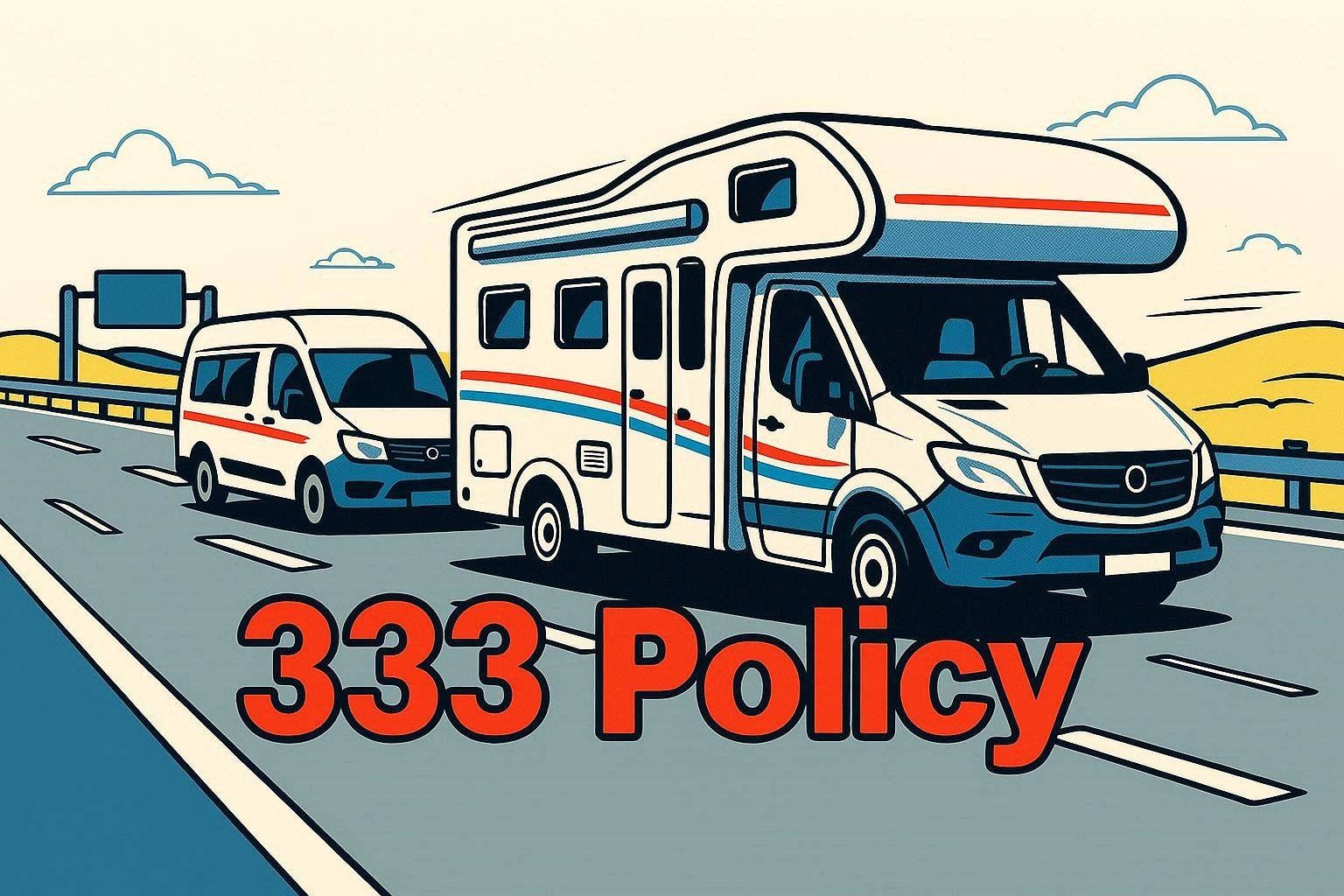
The 333 policy.
Motorhome travel should feel relaxing.
Overambitious routes can quickly turn a holiday into a tiring race between campsites.
The 333 policy, also known as the 3-3-3 rule, offers a calmer way to plan your journey.
It encourages shorter driving days, earlier arrivals, and longer stays.
As a result, you spend less time rushing and more time enjoying the places you came to see.
Why sensible planning still matters when arranging Van Insurance
What Is The 333 Policy?
The 333 policy is a simple planning guideline used by motorhome and campervan travellers.
Typically, it means:
- Drive no more than 300 miles in one day.
- Arrive at your destination by around 3pm.
- Stay for at least three nights.
However, many UK travellers use three hours of driving instead of 300 miles.
That often makes more sense.
After all, 300 motorway miles feel very different from 300 miles through Cornwall, Wales, or the Scottish Highlands.
The exact numbers matter less than the principle.
You are creating a manageable journey, not another rigid timetable.
The 333 policy does not limit your adventure.
It stops the driving from taking over the holiday.
And that is the real appeal.
Instead of measuring success by distance, you measure it by how much you actually enjoyed the trip.
Why Does The 333 Policy Work So Well?
The rule tackles several common problems before they begin.
Long routes may look exciting on a map.
In practice, traffic, roadworks, fuel stops, narrow roads, and tiredness can quickly change the picture.
A slower itinerary gives you room to adapt.
More importantly, it makes the journey feel like part of the holiday.
The 333 Policy Reduces Driver Fatigue
Motorhomes and campervans often demand more concentration than smaller vehicles.
They may be wider, heavier, taller, and slower to manoeuvre.
Therefore, even an ordinary route can feel tiring.
Narrow lanes require careful positioning.
Strong winds may affect stability.
Busy junctions can also feel more demanding.
Fatigue rarely arrives suddenly.
Instead, patience fades and concentration slips.
You may brake later, miss signs, or make rushed decisions.
That is where the three-hour guideline helps.
It encourages you to stop before tiredness starts controlling the journey.
It also supports the wider principles of proper vehicle compliance and road safety.
But there is another advantage.
You are less likely to start the following day already exhausted.
It Removes the Pressure to Rush
Strict itineraries create pressure.
You leave late.
Traffic builds.
A short lunch stop takes longer than expected.
Suddenly, the afternoon becomes a race.
And this is where poor decisions often begin.
Drivers may skip breaks or try to recover lost time.
Neither choice makes the journey safer or more enjoyable.
The 333 policy creates breathing room.
Because the route is shorter, delays become inconvenient rather than disastrous.
You can stop for coffee.
Can take a scenic detour.
You can also pull over when tired instead of pushing on.
In other words, the road stops feeling like an obstacle.
Arriving by 3pm Makes Everything Easier
Early arrival may sound like a small detail.
However, it can transform your first evening.
You have daylight to find the entrance, inspect the pitch, and park safely.
Can connect electricity, organise water, and resolve booking problems without rushing.
You also avoid navigating an unfamiliar campsite in darkness.
That matters even more during autumn and winter.
Earlier arrivals give you time to settle.
You can explore, buy supplies, or simply relax.
Here is the difference.
Arriving at 3pm gives you an evening.
Arriving at 8pm gives you another task.
Staying Three Nights Creates a Better Stop
Many first-time travellers try to visit too many places.
They arrive, unpack, sleep, and leave again the next morning.
At first, that approach feels efficient.
Soon, it starts to feel mechanical.
Three-night stays change the rhythm.
The first evening lets you settle.
The next day gives you time to explore.
The final day leaves room for something unplanned.
Then you move on.
The goal becomes collecting destinations actually experiencing them.
You may visit fewer places.
Nevertheless, you are more likely to enjoy and remember them.
It Gives You Room for the Unexpected
Road trips rarely unfold perfectly.
Weather changes.
Roads close.
Vehicles develop warning lights.
Passengers become tired or unwell.
A packed itinerary leaves little room for any of this.
By contrast, the 333 policy gives you flexibility.
You can delay a departure, stay another night, or take a rest day.
That becomes especially useful during longer tours.
Small setbacks can otherwise disrupt every booking that follows.
A slower schedule absorbs them more easily.
And importantly, it gives you time to notice vehicle problems before they become emergencies.
Strange noises, tyre-pressure changes, or fluid leaks deserve attention.
Ignoring them because you still have 200 miles to cover rarely ends well.
It Encourages More Realistic Route Planning
Distance alone tells you very little.
A 100-mile motorway journey may feel straightforward.
A 100-mile route through narrow villages may take most of the day.
Therefore, sensible planning should consider:
- Road type
- Traffic and roadworks
- Vehicle size
- Fuel or charging stops
- Planned breaks
- Weather
- Campsite check-in times
- Driver experience
This is particularly important for first-time campervan drivers.
Larger vehicles need more room for braking, turning, and parking.
Before travelling, also check how your vehicle is classified.
The article Are You Driving a Car or a Van? Check Your Insurance Policy explains why that distinction matters.
Your route should suit the vehicle you drive.
So should your insurance.
How To Use the 333 Policy On A UK Road Trip
The 333 policy works best when you adapt it to your route, vehicle, and driving experience.
Plan by Time, Not Distance
Mileage can be misleading.
Three hours on a motorway feels very different from three hours on narrow rural roads.
Therefore, check the likely journey time before choosing your next stop.
Then allow extra time for:
- Traffic
- Fuel
- Charging
- Food
- Toilet breaks
- Roadworks
- Difficult access roads
Here is the important part.
Do not rely completely on your navigation app.
Unexpected delays can quickly turn a relaxed journey into a stressful one.
Adapt The 333 Policy Rule To Your Confidence
Experienced drivers may feel comfortable travelling for longer.
New motorhome drivers may prefer shorter stages.
That is perfectly sensible.
Larger vehicles require more concentration, particularly on unfamiliar roads.
Some travellers also use the 2-2-2 rule.
They drive for two hours, arrive by 2pm, and remain for two nights.
The exact numbers matter less than the outcome.
Your journey should feel manageable.
Does The 333 Policy Affect Van Insurance?
The 333 policy does not directly reduce your insurance premium.
However, it may encourage safer driving and more realistic journey planning.
That can help reduce fatigue, rushed decisions, and avoidable incidents.
But there is a catch.
Safe driving habits cannot compensate for unsuitable insurance.
Make Sure Your Cover Matches the Vehicle
Converted vans and campervans may require different cover from standard panel vans.
Your insurer may need to know about:
- Permanent beds
- Cooking equipment
- Roof conversions
- Solar panels
- Extra batteries
- Windows
- Awnings
- Bike racks
- Overseas travel
Do not hide modifications to obtain Very Cheap Van Insurance.
A low premium means little if the policy does not cover the vehicle properly.
The cheapest van insurance should still reflect how you use the van.
Check Your Annual Mileage
Long touring holidays can add thousands of miles to your yearly total.
Therefore, check the mileage figure shown on your policy.
An unrealistic estimate may cause problems later.
Accuracy matters more than choosing the lowest possible number.
Check What Is Covered Inside the Van
Standard Van Insurance may cover the vehicle without fully protecting its contents.
Items such as bicycles, laptops, cameras, clothing, and camping equipment may need separate cover.
Always read the policy wording.
The van may be insured, while the belongings inside it are not.
Common 333 Policy Mistakes
The rule is simple.
Still, travellers often make avoidable mistakes.
Treating 300 Miles as a Target
Three hundred miles should not become a daily challenge.
In many parts of the UK, that distance could create a long and exhausting journey.
Ignoring Road Conditions
A short route may include steep hills, narrow bridges, single-track roads, or difficult parking.
Check the route before leaving.
Booking Every Stop Too Tightly
Advance bookings can help during busy periods.
However, an inflexible schedule may recreate the pressure the rule aims to remove.
Leave some room for changes.
Forgetting Basic Vehicle Checks
Before travelling, check:
- Tyres
- Oil
- Coolant
- Lights
- Wipers
- Mirrors
- Loose items
- Insurance documents
Telematics may also help some drivers monitor mileage and driving behaviour.
Read our guide to how telematics devices can save money on van insurance.
Conclusion
The 333 policy helps motorhome and campervan travellers enjoy slower, safer, and less stressful journeys.
It will not automatically secure Cheap Van Insurance UK, but it can encourage better planning and more realistic driving habits.
Before travelling, check your mileage, modifications, vehicle classification, and policy details.
Cheap cover only offers good value when it remains suitable.